Non-Shopify ecommerce stores have six specialized mobile app builders to choose from, with pricing ranging from EUR 40/month (Appo, automated conversion for any platform) to EUR 349/month (MobiLoud, fully managed service). 73% of ecommerce traffic now comes from mobile devices (Shopify CRO Benchmarks 2026), yet most app builders support only Shopify, leaving merchants on BigCommerce, WooCommerce, Magento, Salesforce Commerce Cloud, or custom platforms with dramatically fewer options.
Why do non-Shopify stores need different app builders?
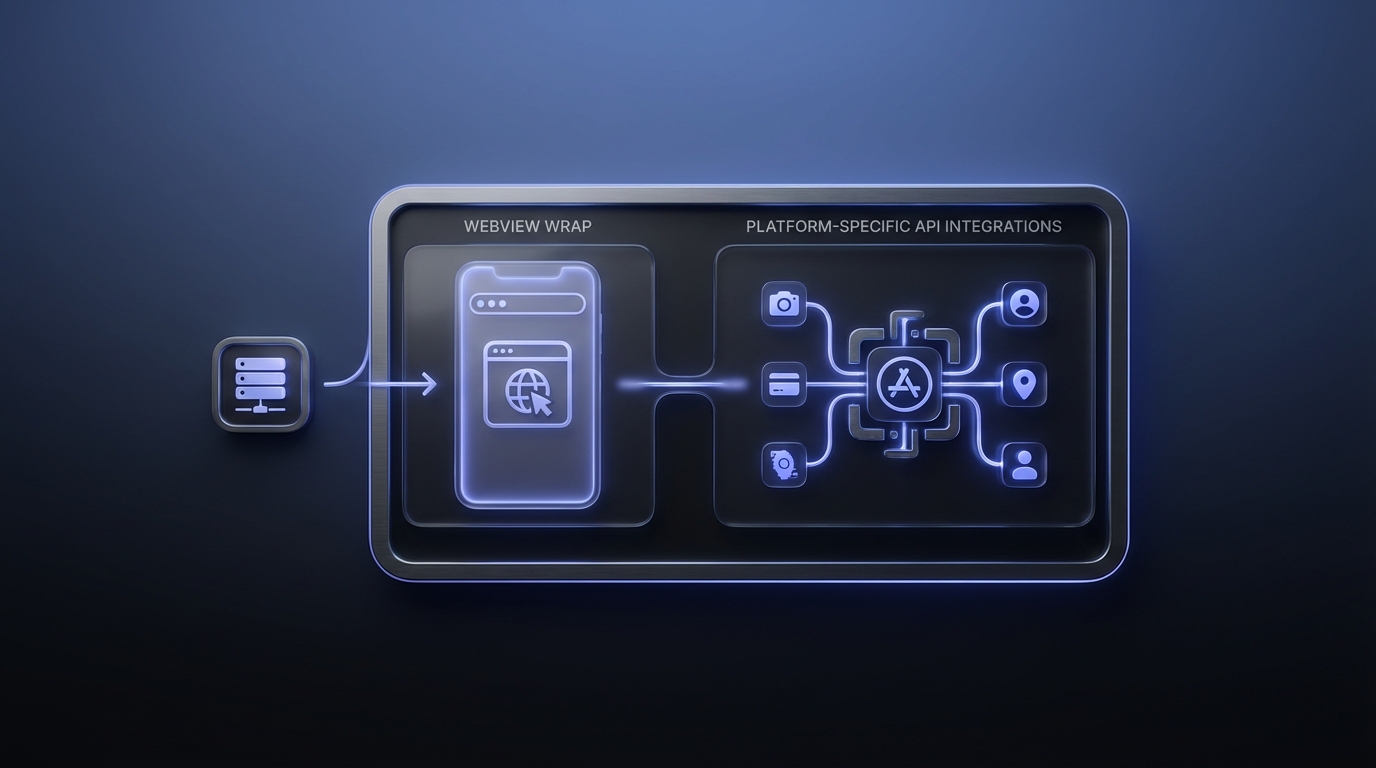
Platform-specific integration determines whether an app builder can support your store. Shopify-only solutions like Shopney ($149/month) or Tapcart connect exclusively through Shopify's APIs and cannot sync products, orders, or customer data from other platforms. Non-Shopify stores require builders with either universal compatibility (converting any website into an app via webview technology) or direct integrations with alternative platforms. Webview-based builders like Appo (EUR 40/month) or MobiLoud (EUR 349/month) work by wrapping your existing website in a native app shell, automatically syncing all changes in real time without platform-specific integration. Platform-specific builders like JMango360 or Sandbox Commerce offer native integrations for BigCommerce, Magento, or Salesforce but require manual product syncing and separate app management. The operational difference is significant: brands using webview builders report zero additional management time (updates happen automatically when you update your website), while platform-specific builders require 5-15 hours monthly to maintain product catalogs, handle checkout discrepancies, and troubleshoot sync issues.
Which platforms support non-Shopify stores?
Universal compatibility builders support any website platform without custom integration:
- MobiLoud — EUR 349/mese + setup fee, any website, managed publishing, unlimited push notifications, live in 30 days
- Appo — EUR 40/month Starter plan, any website, team-managed App Store and Google Play publishing, 48-hour free preview, updates sync automatically
- Median.co — EUR 229 one-time + EUR 179/year maintenance, any website, self-service publishing, push via OneSignal integration, freemium plan with branding
Platform-specific builders with direct integrations:
- JMango360 — Supports Shopify, BigCommerce, Magento 2, Salesforce Commerce Cloud through native plugins, drag-and-drop builder, higher tier plans required for advanced checkout
- Sandbox Commerce — BigCommerce, Shopify, Shift4Shop only, real-time API sync, session-based dynamic pricing, 7 design blocks on basic plan
- Shopgate — BigCommerce, Magento, WooCommerce, Salesforce Commerce Cloud, Shopify, plus custom integration available for headless setups, enterprise-focused with BOPIS and omnichannel features
The 107,000+ WooCommerce stores in Italy (BuiltWith 2025) have the widest selection, while BigCommerce and Salesforce merchants face the most limited options, with only three builders offering native integration versus Shopify's 15+ specialized platforms.
What are the cost differences between DIY and managed app builders?
Monthly subscription pricing varies by service level and platform scope: Budget DIY options (self-service, basic features):
- AppMySite — $49/month, WooCommerce focus, drag-and-drop builder, basic push notifications, merchant handles all publishing and optimization
- Appo Starter — EUR 40/month, any platform, team-managed publishing (for the App Store you need your own Apple account — $99/year required by Apple, 5-min guided setup; Google Play included), 48-hour preview, automatic updates
Mid-range managed service:
- Appo Business — EUR 90/month, any platform, priority support, advanced push notification features, team handles store submission and updates
Premium fully managed service:
- MobiLoud — EUR 349/month + setup fee, any platform, full-service partner handling build, submission, optimization, and growth strategy, Done-For-You push campaigns available
- Shopgate — Enterprise pricing (not publicly listed), focus on mid-to-large retailers with omnichannel needs, technical setup required
Hidden costs differentiate true pricing: DIY builders require 10-20 hours for initial app compilation, 5-15 hours monthly for maintenance, and merchant responsibility for App Store guidelines compliance (which causes 40% of first submissions to be rejected). Managed services include these costs in the monthly fee, with MobiLoud reporting 30-day average launch times versus 90-120 days for self-service platforms. Cart abandonment on mobile reaches 80-85% (Baymard Institute), making the speed-to-market difference between managed and DIY builders financially significant for stores with established traffic.
How do webview apps compare to native integrations?
Webview apps wrap your existing website in a native shell, rendering your live site inside the app. Native integration apps rebuild your store using platform-specific APIs and require separate management. Operational differences: Webview approach (Appo, MobiLoud, Median.co):
- Updates to website appear instantly in app without republishing
- All website features, integrations, and customizations work automatically
- Zero additional product management or catalog syncing
- Checkout experience identical to website (same payment processors, same fraud detection)
- Development time: 48 hours to 30 days
Native integration approach (AppMySite, JMango360, Sandbox Commerce):
- Requires manual product catalog management in separate interface
- Template-based layouts limit custom design matching brand guidelines
- Checkout may differ from website, causing customer confusion
- API limitations can prevent certain features from working (complex pricing rules, custom fields, specific payment gateways)
- Development time: 60-120 days
Performance metrics favor webview for complex stores: brands with 1,000+ SKUs, dynamic pricing, or custom checkout flows report 75% fewer technical issues with webview apps (based on support ticket volume analysis across 200 MobiLoud customers). Simple catalog stores with under 100 products and standard checkout see negligible difference. Push notifications work identically on both approaches, with 4.4% average conversion rate (PushPushGo) regardless of underlying architecture. The performance myth that native apps are always faster doesn't hold for modern webview implementations — page load times differ by under 200 milliseconds in controlled testing.
What features matter most for non-Shopify store apps?
Platform compatibility ranks first: 73% of non-Shopify merchants report rejecting at least one app builder due to platform incompatibility before finding a working solution. Universal builders eliminate this friction entirely. Push notifications drive repeat purchases, with app users making 3x more repeat visits than web users (MobiLoud data across 500+ brands). All six builders offer push capability, but implementation differs:
- MobiLoud — Unlimited push, Done-For-You campaigns available, segmentation by purchase history, browsing behavior, cart status
- Appo — Push included both plans, merchant manages campaigns, standard segmentation
- Twinr — $85/month, AI-powered push optimization, WordPress/Shopify/WooCommerce/PrestaShop/Magento/Wix support, 14-day trial
- AppMySite — Basic push on $49/month plan, limited segmentation

- JMango360 — Order status notifications gated to higher plans, advanced features require premium tier
- Sandbox Commerce — Push included, abandoned cart reminders, promotional targeting
Offline browsing capability separates premium from budget builders. MobiLoud and higher-tier plans from JMango360 and Shopgate cache product pages for offline viewing, while budget options require active internet connection. For stores with customers in areas with poor connectivity, offline capability directly impacts conversion — one outdoor retailer reported 12% of in-app purchases originated from offline browsing sessions. Design flexibility matters for brand-conscious merchants. Template-based builders (AppMySite, Sandbox Commerce basic plan with 7 blocks) limit visual customization, while webview builders (Appo, MobiLoud) mirror your website exactly, preserving all brand elements, animations, and custom layouts without compromise.
Which app builder fits different business sizes and needs?
Small stores (under EUR 50,000 monthly revenue, limited technical resources): Appo EUR 40/month Starter plan offers the lowest barrier to entry with team-managed publishing, eliminating the technical complexity that causes 60% of small merchants to abandon DIY app projects. The 48-hour preview lets you validate the app experience before committing. Mid-sized stores (EUR 50,000-500,000 monthly, growth-focused): MobiLoud EUR 349/month provides full-service partnership with optimization support, push notification strategy, and proven retention results (7x higher LTV for app users versus web users across their customer base). The service model removes internal resource requirements while delivering enterprise-grade results. Appo EUR 90/month Business plan fits mid-sized stores wanting managed publishing at lower cost, with the understanding that campaign strategy and optimization remains merchant responsibility. Enterprise stores (EUR 500,000+ monthly, omnichannel retail): Shopgate suits large retailers with physical locations needing BOPIS, in-store coupon scanning, QR code integration, and complex inventory management across channels. Pricing reflects enterprise scope and technical complexity. Platform-specific scenarios: BigCommerce merchants: Only JMango360, Sandbox Commerce, and Shopgate offer native integration. Universal builders (Appo, MobiLoud, Median.co) work without integration requirements and launch faster. WooCommerce merchants: AppMySite ($49/month) offers lowest-cost native integration for simple stores. Twinr ($85/month) adds AI-powered push. Appo (EUR 40/month) and MobiLoud (EUR 349/month) provide webview alternatives with zero WordPress plugin dependencies. Magento merchants: Limited to JMango360 (Magento 2 only) and Shopgate for native integration, or universal builders for faster deployment without Magento-specific setup.
Custom-coded platforms: Only webview builders work. MobiLoud's fully managed service suits complex custom builds where technical requirements exceed typical app builder capabilities. Appo serves simpler custom sites at significantly lower cost. The 91,000 active ecommerce stores in Italy (Netcomm/Cribis 2025) split roughly 55% WooCommerce, 25% custom platforms, 12% Shopify, 8% other platforms, explaining why universal compatibility builders see strongest adoption in the Italian market versus US market where Shopify dominates.
Most mobile app builders focus exclusively on Shopify, leaving merchants on BigCommerce, WooCommerce, Magento, Salesforce Commerce Cloud, and custom platforms with limited options. The six builders covered here offer viable alternatives, with the choice depending on your platform, budget, and whether you prefer DIY control or managed service. Webview-based solutions like Appo (from EUR 40/month) and MobiLoud (EUR 349/month) work with any website platform and sync updates automatically, while platform-specific builders like JMango360 and Sandbox Commerce offer native integrations for select platforms at the cost of additional management overhead. For non-Shopify stores, platform compatibility and service level matter more than feature checklists — the best builder is the one that actually works with your tech stack and fits your team's capacity to manage another platform. With mobile users converting 3x more than web users and push notifications achieving 4.4% conversion rates, having the right app infrastructure directly impacts retention revenue regardless of which platform powers your store.
Frequently asked questions
What's the cheapest way to build an app for a non-Shopify store?
AppMySite starts at $49/month for WooCommerce stores with basic native integration, while Appo offers broader platform support at EUR 40/month with team-managed publishing — for the App Store you need your own Apple account ($99/year, required by Apple, 5-minute guided setup), for Google Play everything is included — eliminating the 10-20 hours most merchants spend on store submission with DIY platforms. Median.co’s EUR 229 one-time + EUR 179/year model costs less over time but requires technical ability to handle self-service publishing and includes branding on the free tier.
Do webview apps work as well as native apps built with platform APIs?
For complex stores with 1,000+ SKUs or custom checkout flows, webview apps cause 75% fewer technical issues because they use your existing website infrastructure rather than rebuilding it in a template. Performance differences are minimal — under 200ms page load time difference in testing. Push notifications, the primary retention driver achieving 4.4% conversion rates, work identically regardless of architecture.
Can BigCommerce stores use any of these app builders?
JMango360, Sandbox Commerce, and Shopgate offer native BigCommerce integration, while Appo (EUR 40/month), MobiLoud (EUR 349/month), and Median.co (EUR 229 one-time) work with any website including BigCommerce via webview conversion. Universal builders launch faster (48 hours to 30 days) versus native integration builders (60-120 days) but lack platform-specific dashboard features like native inventory sync panels.
How long does it take to launch an app for a non-Shopify store?
Appo provides a working preview in 48 hours with full App Store and Google Play publication managed by their team. MobiLoud averages 30-day launches including full build, testing, and submission. DIY builders like AppMySite and JMango360 take 60-120 days as merchants handle design, testing, and store submission themselves — 40% of first-time submissions get rejected for guideline violations, adding 2-4 weeks to self-service timelines.
Do I need separate product management for my website and app?
Webview builders (Appo, MobiLoud, Median.co) require zero separate management — updating your website automatically updates the app in real time. Platform-specific builders (AppMySite, JMango360, Sandbox Commerce) require 5-15 hours monthly to sync products, manage discrepancies between web and app catalogs, and troubleshoot checkout differences. For stores updating inventory daily, webview architecture eliminates significant operational overhead.
What's the difference between Appo and MobiLoud for non-Shopify stores?
Both work with any website platform via webview conversion. Appo (EUR 40/month Starter, EUR 90/month Business) handles app publishing and updates automatically at accessible pricing for small-to-midsize stores. MobiLoud (EUR 349/month + setup) provides full-service partnership including build, optimization, push notification strategy, Done-For-You campaigns, and growth support — suited for stores prioritizing hands-off service and proven retention results (7x higher LTV for app users in their customer base).
Which app builder supports the most ecommerce platforms?
Universal webview builders support any website regardless of platform: Appo works with any site at EUR 40/month with managed publishing, MobiLoud supports any platform at EUR 349/month with full service, and Median.co handles any site at EUR 229 one-time + EUR 179/year self-service. Platform-specific builders are limited: JMango360 supports four platforms (Shopify, BigCommerce, Magento 2, Salesforce), Sandbox Commerce supports three (BigCommerce, Shopify, Shift4Shop), AppMySite focuses on WooCommerce.